








Summary
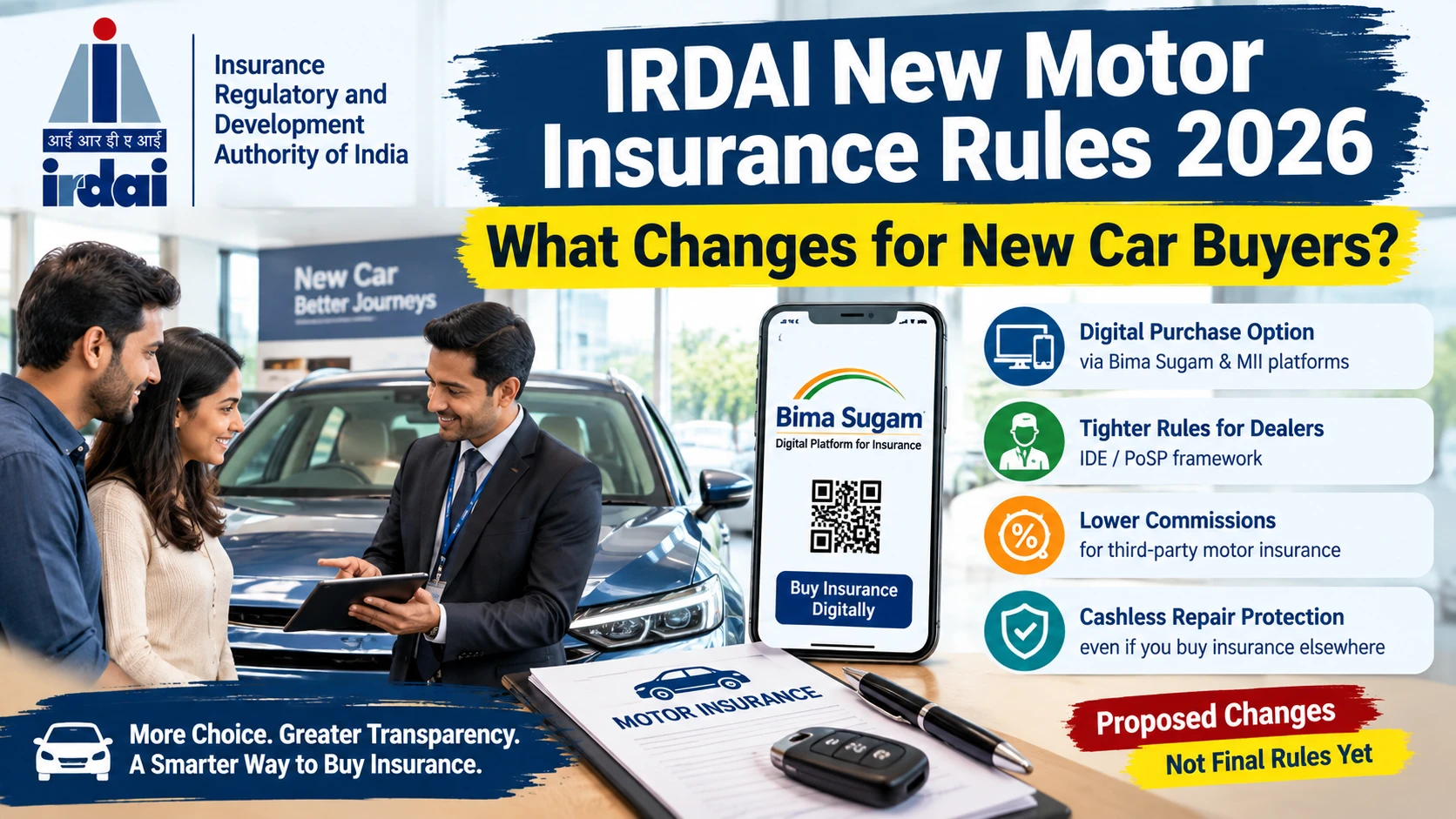
- IRDAI has proposed new changes to motor insurance distribution that could affect new car buyers.
- New-vehicle buyers could get a clearer digital option to purchase motor insurance through platforms such as Bima Sugam.
- These are proposals under consultation and are not final motor insurance rules yet.
IRDAI Proposes New Motor Insurance Rules: What Could Change?
Buying motor insurance along with a new car could look different if the latest proposals from the Insurance Regulatory and Development Authority of India (IRDAI) are implemented.
The regulator has proposed reforms covering the distribution of motor insurance, the role of automobile dealers, commissions paid to distributors and the use of digital platforms for purchasing policies.
One of the most noticeable changes for a new car buyer could be the introduction of a clearer digital option for purchasing motor insurance, including access through Market Infrastructure Institution (MII) platforms such as Bima Sugam.
The proposals are part of IRDAI’s consultation on “Reforms for Recalibrating Economics of Insurance Distribution.”
However, it is important to note that these are proposed reforms and not final rules. IRDAI has invited comments and suggestions from stakeholders before finalising the framework.
Why Is IRDAI Reviewing Motor Insurance Distribution?
IRDAI has highlighted a significant increase in motor insurance commissions in recent years.
According to the consultation paper information provided in the source, motor insurance premiums increased by around 34% between FY23 and FY25, while commissions increased by approximately 259% during the same period.
The regulator has therefore proposed changes aimed at recalibrating the economics of insurance distribution.
The proposals cover areas such as:
- Motor insurance commissions
- Dealer-based insurance distribution
- Digital insurance platforms
- Third-party motor insurance
- Own-damage and comprehensive insurance
- Cashless repair services
- Customer communication and verification
For new car buyers, the changes could make the insurance purchase process more transparent by providing an alternative digital route alongside dealer-based insurance distribution.
Motor Insurance Commissions Rise Sharply
One of the major issues highlighted by IRDAI is the level of commission paid in motor insurance distribution.
According to the figures cited in the consultation paper, the average commission rate in motor insurance was around 24% in FY25, although the rate varied between approximately 13% and 50%.
OEM brokers and Motor Insurance Service Providers, or MISPs, together accounted for around 30% of the motor insurance market and received an average commission of approximately 24%, with the maximum reaching 31%.
In FY25, these distributors generated approximately ₹29,000 crore in premiums and received nearly ₹7,050 crore in commissions, according to the source material.
The figures have prompted IRDAI to examine how motor insurance is distributed and how commissions are structured.
Commission Difference Between New and Old Vehicles
The proposed reforms also draw attention to the difference in commission levels between new and older vehicles.
According to the consultation paper figures provided in the source:
- OEM brokers received an average commission of around 27% for new vehicles.
- MISPs received an average commission of around 38% for new vehicles.
- MISPs received an average commission of around 12% for old vehicles.
This difference is one of the reasons IRDAI has proposed changes to the economics and structure of motor insurance distribution.
Read Also: Apple iPhone Settlement: How to Claim Up to $95
New Car Buyers Could Get a Digital Insurance Option
One of the most important proposed changes concerns the way new car buyers can purchase insurance.
IRDAI has proposed that motor insurance products for both new and old vehicles should be available through Market Infrastructure Institution platforms such as Bima Sugam.
For customers purchasing a new vehicle, motor dealers would be required to prominently display an option to purchase motor insurance through an MII platform.
This could include displaying a QR code that customers can scan to access the digital platform.
Dealers would also have to make new-vehicle customers aware of this option.
More Stories

ixigo Q2 Results: Profit Reaches ₹63.42 Crore, Revenue Rises 13% as Hotels Business Expands
FPI Outflows October 2026: Foreign Investors Withdraw ₹52,100 Crore From Indian Stocks

Paras Healthcare IPO 2026: ₹1,450 Crore Issue, Price Band, Dates and Review
57th GST Council Meeting 2026: Major Reforms Proposed for Taxpayers and Businesses


What Could This Mean for New Car Buyers?
Currently, insurance is often offered to customers as part of the new-car purchasing process through the dealership.
Under the proposed framework, buyers could have a more clearly displayed alternative to purchase motor insurance digitally.
In practical terms, a customer could potentially:
- Visit a car dealership to purchase a new vehicle.
- Receive information about the insurance options available.
- Scan a QR code provided by the dealer.
- Access an MII platform such as Bima Sugam.
- Explore available motor insurance products.
- Purchase a policy through the digital route.
The exact customer journey will depend on the final rules and how the platforms are implemented.
What Is Bima Sugam?
Bima Sugam is referred to in the proposal as a platform through which insurance products can be made available digitally.
The proposed framework would allow customers to access motor insurance products through MII platforms.
For new car buyers, this could create a more visible alternative to purchasing insurance directly through a motor dealer.
However, the proposal does not mean that customers would automatically be required to purchase insurance through Bima Sugam. The key proposal is to make the digital option available and clearly communicated.
Proposed 5% Platform Fee for Certain Not-for-Profit Platforms
IRDAI has also proposed a limit on the platform fee for not-for-profit platforms established by all or a group of insurers.
According to the source material, the platform fee would not exceed 5% of the premium.
The stated purpose of the fee would be to recover platform-related costs.
This proposal forms part of IRDAI’s broader effort to establish a more structured framework for digital insurance distribution.
What Happens to Motor Dealers Under the Proposed Rules?
The proposed framework could also change how motor dealers distribute insurance.
IRDAI has proposed bringing motor dealers into a more clearly defined insurance distribution structure.
Motor dealers meeting the proposed requirements to operate as an Insurance Distribution Entity (IDE) would need to register as an IDE if they want to sell insurance.
An IDE broker could sell insurance products from multiple insurers.
Other dealers that do not qualify under the proposed IDE structure could either:
- Tie up as a Point of Sales Person (PoSP) of an IDE, or
- Become an associate of a single insurer.
The exact requirements would depend on the final framework notified by IRDAI.
IRDAI Proposes Restrictions on Dealer Incentives
The regulator has also proposed restrictions on arrangements between motor dealers, OEMs and insurance distribution entities where such arrangements could operate against policyholder interests.
The consultation paper specifically refers to arrangements such as:
- Service-level agreements
- Performance-linked incentive plans
- Other arrangements linked to motor insurance sales
The proposal is aimed at addressing the incentives surrounding motor insurance distribution and the way policies are sold to vehicle buyers.
Buying Insurance Elsewhere Should Not Affect Cashless Repair
Another important proposal concerns cashless repair services.
IRDAI has proposed that motor dealer IDEs and PoSPs should not deny cashless repair services simply because the customer did not purchase the insurance policy from that particular dealer.
This could be significant for new car buyers.
For example, if a customer purchases a new car but chooses to purchase motor insurance through an alternative digital platform rather than the dealership, the proposed framework would prevent the dealer from denying cashless repair solely on the basis of where the policy was purchased.
This proposal is intended to separate the customer’s choice of insurance distributor from access to eligible repair services.
Third-Party Motor Insurance Commissions Could Fall
IRDAI has also proposed lower commissions for mandatory third-party motor insurance.
Third-party insurance is mandatory for vehicles and is required for vehicle registration.
According to the figures cited in the source, the average commission on third-party motor insurance increased significantly, from approximately 4.3% in FY23 to 22% in FY25.
IRDAI has therefore proposed changes to the commission structure.
The regulator has also classified third-party insurance for new vehicles as a “nil-effort product”, since evidence of insurance is required for vehicle registration.
Similarly, own-damage and comprehensive insurance for new vehicles have been described as low-effort products in the consultation material.
What Could the Proposed Rules Mean for New Car Buyers?
For a person buying a new car, the most visible impact could be a change in the insurance purchase process.
The proposed framework could provide buyers with:
1. A clearer digital insurance option
Dealers could be required to prominently display a digital insurance purchasing option, including a QR code to access an MII platform.
2. More choice in purchasing insurance
Customers could have a more visible alternative to purchasing insurance directly through the dealership.
3. Protection against denial of cashless repair
The proposal says dealers should not deny cashless repair solely because the customer purchased the insurance policy elsewhere.
4. Changes in dealer insurance distribution
Motor dealers could have to operate under a more clearly defined IDE, PoSP or insurer-associated structure.
5. Changes in insurance distribution economics
Lower proposed commissions for certain motor insurance products could change the incentives surrounding insurance distribution.
What Could Change for Existing Car Owners?
The proposals are not limited only to new vehicles.
IRDAI has proposed that motor insurance products for both new and old vehicles should be available through MII platforms such as Bima Sugam.
However, some of the most visible proposed requirements relate specifically to the purchase of insurance alongside a new vehicle.
Existing vehicle owners could also benefit from greater digital availability of insurance products if the proposed framework is implemented.
Why the Proposal Matters
The proposed reforms could change the relationship between car dealers, insurance companies, digital platforms and customers.
The current distribution model can involve the vehicle dealer playing an important role in arranging insurance when a new vehicle is purchased.
IRDAI’s proposals could introduce a more visible digital alternative while also establishing clearer rules around dealer participation and incentives.
For customers, the key issue will be whether the final framework provides genuine choice without making the vehicle-buying process more complicated.
Are These New Motor Insurance Rules Final?
No.
The changes discussed above are proposals contained in IRDAI’s consultation process.
IRDAI has invited comments and suggestions from stakeholders before finalising the framework.
Therefore, new car buyers should not assume that the proposed commission rates, dealer requirements or digital insurance process are already mandatory.
The final provisions could change after consultation.
What Should New Car Buyers Do Now?
Until the proposed framework becomes final, customers buying a new vehicle should continue to check the terms and conditions of their motor insurance policy carefully.
Before purchasing a policy, buyers can compare factors such as:
- Premium
- Insured Declared Value (IDV)
- Third-party cover
- Own-damage cover
- Add-on covers
- Deductibles
- Cashless garage network
- Claim-related terms
- Policy exclusions
The dealer’s insurance offering can be compared with other available options, subject to the applicable rules and the customer’s requirements.
Disclaimer: EduTaxTuber provides content for general educational and informational purposes only. While we make reasonable efforts to keep the information accurate and updated, laws, regulations, market conditions, software features, and other information may change. Some content may be created or assisted by AI tools and may contain errors or omissions. Readers should verify important information with official sources or qualified professionals before making any tax, legal, financial, investment, business, or other decisions. EduTaxTuber does not guarantee the completeness or accuracy of the information and does not provide professional advice.