






Summary
- Adani Energy Solutions reported ₹1,364 crore in consolidated profit after tax (PAT) for Q2 FY27, compared with ₹557 crore a year earlier.
- Reported PAT increased 145% year-on-year, although deferred-tax benefits also influenced the quarterly bottom line.
- Total income increased 51% to ₹10,239 crore.
- Company-reported EBITDA rose 67% to ₹3,548 crore, while operating EBITDA increased 68% to ₹3,070 crore.
- Adani Energy Solutions has installed approximately 1.48 crore smart meters cumulatively.
- The company’s smart-meter implementation pipeline stands at 2.46 crore meters, with indicated revenue potential of ₹29,519 crore.
- Its transmission projects under construction represent approximately ₹87,000 crore.
- A 25-year agreement covering 2,500 MW of round-the-clock power supply was signed with Maharashtra’s electricity distribution utility.
Adani Energy Solutions Announces Q2 FY27 Results
Adani Energy Solutions Limited (AESL) has reported a sharp improvement in its quarterly financial performance, supported by growth in electricity transmission, distribution, smart metering and energy solutions.
The company announced its results for the July–September 2026 quarter on Thursday, 22 October.
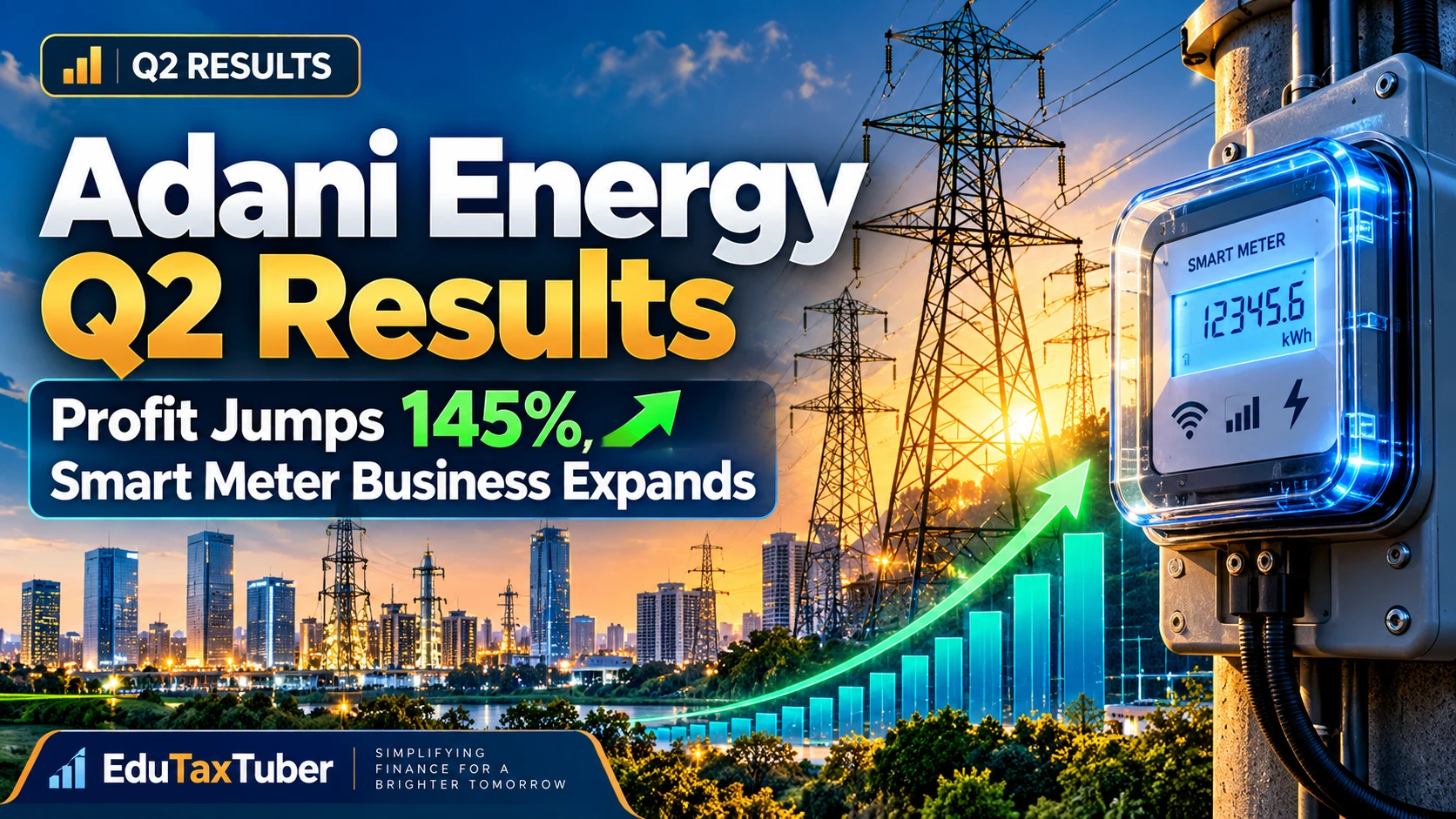
According to the company’s official earnings release, consolidated profit after tax increased 145% year-on-year to ₹1,364 crore, compared with ₹557 crore in the corresponding period last year.


Total income reached ₹10,239 crore, representing 51% growth.
EBITDA increased 67% to ₹3,548 crore.
These figures indicate stronger business activity across several divisions.
However, investors should look beyond the headline profit increase.
Reuters reported that a deferred-tax gain also supported the quarterly bottom line.
Therefore, the entire 145% increase should not automatically be treated as growth in recurring cash earnings.
The company’s operating results, smart-meter execution, project pipeline and financing requirements provide a broader picture of its financial position.
Adani Energy Solutions Q2 FY27 Financial Highlights
| Financial indicator | Q2 FY26 | Q2 FY27 | YoY change |
|---|---|---|---|
| Total income | ₹6,767 crore | ₹10,239 crore | +51% |
| Company-defined operational revenue | ₹4,740 crore | ₹7,167 crore | +51% |
| Operating EBITDA | ₹1,825 crore | ₹3,070 crore | +68% |
| EBITDA | ₹2,126 crore | ₹3,548 crore | +67% |
| Consolidated PAT, company presentation | ₹557 crore | ₹1,364 crore | +145% |
Source: Adani Energy Solutions’ official Q2 FY27 earnings release dated 22 October 2026.
The company also reported statutory consolidated revenue from operations of approximately ₹10,076 crore.
This is different from its separately defined ₹7,167 crore operational-revenue measure and its ₹10,239 crore total income.
These three figures should not be used interchangeably when comparing financial performance.
Why Did Adani Energy’s Profit Rise 145%?
The strong PAT growth reflects a combination of operational expansion and accounting effects.
Transmission revenue increased as the company executed new infrastructure projects.
Smart metering contributed more revenue and operating earnings.
The energy solutions business expanded significantly compared with the previous year’s relatively small base.
However, deferred-tax accounting also affected reported profit.
Deferred-Tax Gain: What Investors Should Understand
Reuters identified a deferred-tax benefit as one of the factors supporting AESL’s quarterly net earnings.
Deferred-tax movements can arise from differences between accounting recognition and the treatment of items for tax purposes.
Such adjustments affect reported profit but are not necessarily equivalent to cash generated through electricity transmission or meter installations.
Reuters reported a tax-related gain of approximately ₹1,581 crore in the financial statements.
Investors should consult the detailed tax reconciliation before attempting to calculate normalised profit.
Simply subtracting that amount from ₹1,364 crore of reported PAT would not produce a reliable adjusted-earnings figure because the tax line, other adjustments and ownership attribution must be reconciled correctly.
The practical takeaway is that EBITDA, operating profit, cash flow and the tax notes should all be reviewed alongside headline PAT.
Why Are Different Publications Reporting ₹1,323 Crore Profit?
Some financial publications reported approximately ₹1,323 crore of net profit, showing growth of about 148%, rather than the company’s ₹1,364 crore PAT headline.
The figures relate to different consolidated profit presentations.
The company press release highlights overall PAT of ₹1,364 crore, while other reporting uses the approximately ₹1,323 crore measure attributable to shareholders.
Investors comparing quarterly earnings should use the same profit definition and matching prior-year figure.
Mixing the ₹1,364 crore number with a different comparative base could produce an inaccurate growth calculation.
EBITDA Grows 67% to ₹3,548 Crore
AESL reported quarterly EBITDA of ₹3,548 crore, compared with ₹2,126 crore a year earlier.
Its operating EBITDA increased from ₹1,825 crore to ₹3,070 crore.
The distinction matters.
Read Also: LTTS Share Price Jumps Nearly 15% After Q2 Results: ₹548 Crore Profit, ₹20 Dividend and AI Deals
The company’s total EBITDA measure includes certain other income and specified adjustments, while operating EBITDA focuses more directly on the performance of its businesses.
Growth in both measures suggests a stronger operating contribution.
However, EBITDA is not equivalent to free cash flow.
Power infrastructure projects require substantial capital expenditure, financing and ongoing maintenance.
Investors should therefore also monitor interest costs, debt levels, capital expenditure and operating cash generation.
Smart Meter Installations Reach 1.48 Crore
Smart metering remains one of AESL’s important growth businesses.
According to its official release, the company had installed approximately 14.82 million smart meters, equivalent to 1.482 crore, cumulatively by the end of September 2026.
This is nearly double the approximately 7.4 million cumulative installations reported a year earlier.
Smart meters measure electricity consumption digitally and can support remote readings, consumption monitoring and more efficient billing processes.
Their functionality depends on the technology installed and the electricity distribution company’s systems.
They form part of India’s broader efforts to modernise electricity distribution.
Smart Meter Financial Performance
| Smart-meter metric | Q2 FY26 | Q2 FY27 |
|---|---|---|
| Operating revenue, Ind AS basis | ₹117 crore | ₹267 crore |
| Operating EBITDA, Ind AS basis | ₹92 crore | ₹226 crore |
| Operating EBITDA margin | 79% | 85% |
| Cumulative meters installed | 7.4 million | 14.8 million |
Source: AESL’s official Q2 FY27 earnings presentation.
The high reported margin reflects the company’s specified accounting and segment-reporting methodology.
It should not automatically be interpreted as the profit margin earned on the entire lifecycle value of each physical meter.
Smart Meter Pipeline Has ₹29,519 Crore Revenue Potential
The company disclosed an under-implementation pipeline of 24.6 million smart meters, or approximately 2.46 crore meters.
The pipeline covers ten projects.
AESL estimates that these projects have revenue potential exceeding ₹29,519 crore.
This is a business-opportunity figure, not revenue already recognised during Q2 FY27.
Revenue will depend on project execution, contractual terms, operating arrangements and applicable accounting requirements.
The distinction is essential because order-book values can represent activity spread over multiple years.
Investors should monitor installation progress, billing arrangements and actual cash collections.
More Stories

India October PMI 2026: Business Growth Hits 4-Month High, but Hiring Slows
GST Reforms From November 1, 2026: Easier Registration, Faster Refunds and ₹10,000 Notice Proposal
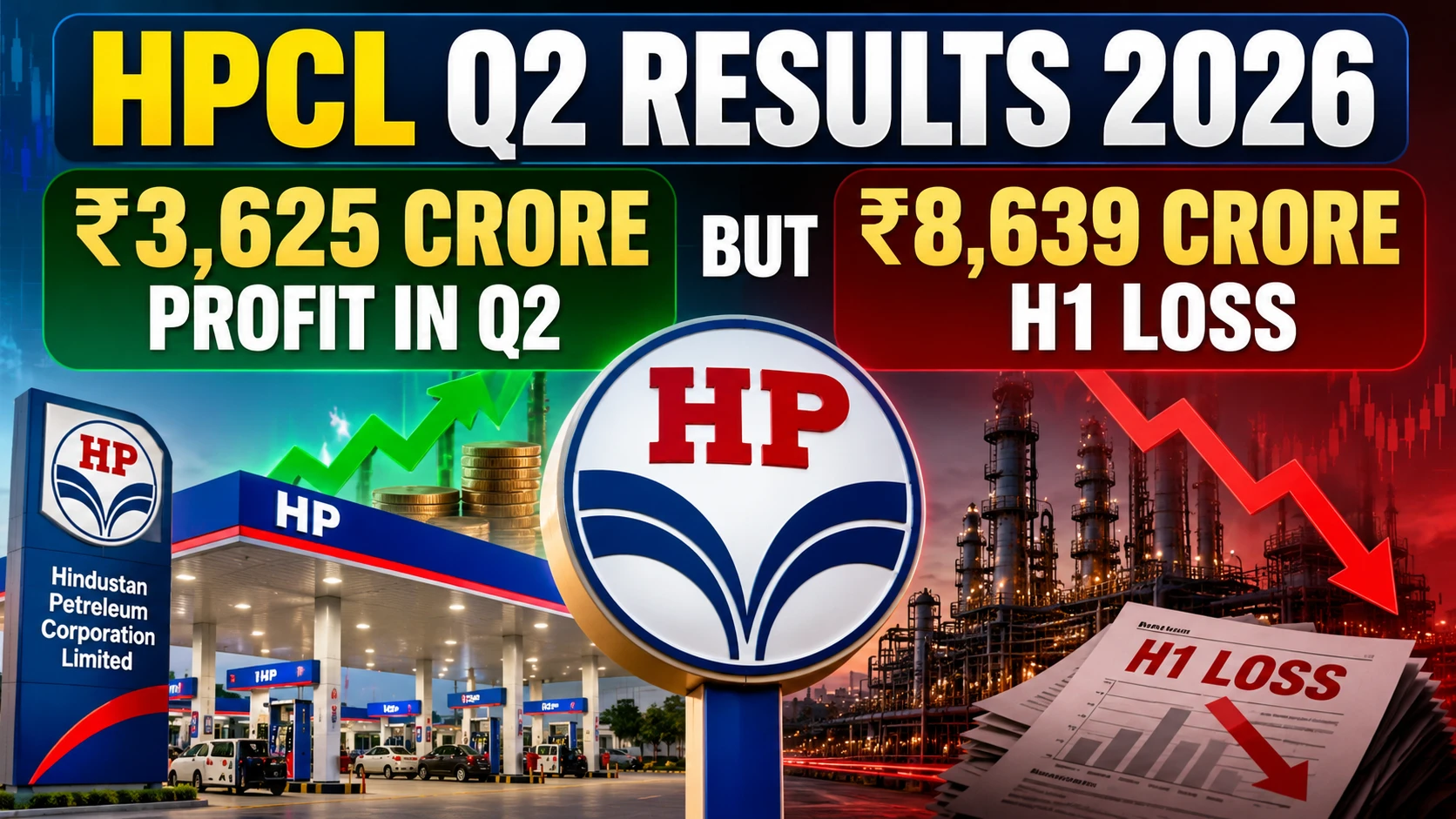
HPCL Q2 Results 2026: ₹3,625 Crore Profit After Q1 Loss, but Half-Year Remains in Red
Adani Energy Q2 Results 2026: Profit Jumps 145% to ₹1,364 Crore, Smart Meter Business Expands


Transmission Project Pipeline Reaches ₹87,000 Crore
Transmission infrastructure is another major component of AESL’s growth strategy.
The company reported an under-construction transmission project portfolio of approximately ₹87,000 crore across 15 projects.
Recent project additions included Vizag Power Transmission Limited and Satara Power Transmission Limited.
Electricity transmission networks transport electricity across high-voltage lines between generating facilities, substations and distribution networks.
New projects can support long-term business expansion.
However, the timing of revenue and earnings recognition depends on commissioning, regulatory arrangements and the relevant project structure.
An ₹87,000 crore project pipeline should not be confused with immediately available cash or current quarterly revenue.
AESL also highlighted a wider near-term transmission tendering opportunity of approximately ₹1.4 lakh crore.
That broader opportunity represents potential industry bidding activity, not projects already won by AESL.
Distribution Business Remains Stable
The company operates electricity distribution activities including Adani Electricity Mumbai Limited.
AESL reported that the Mumbai distribution business increased units sold by approximately 11% year-on-year during the September quarter.
Quarterly electricity units sold increased from 2,650 million units to 2,930 million units.
The company also reported 99.99% supply reliability for its Mumbai distribution operations.
These figures indicate stable operating performance.
However, electricity-distribution earnings depend on regulatory tariffs, costs, consumption patterns and the relevant accounting framework.
Higher units sold do not automatically imply the same percentage increase in profit.
Adani Signs 2,500 MW Power Supply Agreement
AESL has entered into a long-term power purchase agreement with Maharashtra State Electricity Distribution Company Limited (MSEDCL).
The agreement covers 2,500 MW of round-the-clock power supply over a 25-year period.
Round-the-clock electricity arrangements seek to provide power across different times of the day, typically using a combination of generation sources and other supporting infrastructure.
The company has outlined supply arrangements involving solar, wind and battery energy storage.
These projects could create opportunities in electricity aggregation and energy-management services.
However, the final financial contribution will depend on contractual execution, energy procurement, supply costs and applicable performance requirements.
A signed agreement is not equivalent to immediate revenue from the full 25-year contract.
Adani Energy Raises ₹3,500 Crore Through QIP
AESL also disclosed that it raised ₹3,500 crore through a Qualified Institutions Placement during the financial year.
A QIP enables eligible listed companies to raise equity capital from qualified institutional buyers.
For a capital-intensive infrastructure company, raising equity can help finance projects and support balance-sheet flexibility.
However, issuing additional equity shares can dilute existing shareholders’ ownership percentages.
Investors should monitor how effectively the capital is deployed.
A successful fundraise does not by itself establish that future shareholder returns will be positive.
What Could These Results Mean for AESL Shares?
The quarterly results contain several developments that investors may view positively.
EBITDA growth was substantial.
Smart-meter installations expanded, and the company reported a large infrastructure pipeline.
However, the net-profit increase requires analysis of tax-related adjustments.
New power projects also involve execution, regulatory and financing risks.
At the time of preparing this morning report, the regular 23 October market session had not yet produced a verified trading reaction.
Therefore, this article does not claim that AESL shares have already risen or fallen today.
Can Smart Meter Expansion Affect Electricity Bills?
Smart meters may improve measurement accuracy, support remote readings and make consumption data more accessible.
However, the installation of smart meters does not automatically increase or reduce the electricity tariff charged to every consumer.
Tariffs and applicable charges are determined under the relevant state electricity regulatory framework and utility arrangements.
Consumers should refer to official notifications from their distribution company for information about billing, prepaid requirements or tariff changes.
The quarterly results of AESL do not themselves establish a new electricity-billing rule for households across India.
Major Risks to Monitor
Financing and Interest Costs
Power infrastructure projects require significant upfront capital.
Higher financing costs can affect project returns.
Project Execution
Delays in construction, commissioning or meter installation may postpone expected revenue.
Regulatory Framework
Transmission and distribution activities depend partly on regulatory approvals and tariff arrangements.
Tax-Related Earnings Effects
Accounting tax benefits may not recur in the same way in future quarters.
Equity Valuation
Strong quarterly results do not automatically mean the company’s shares are inexpensive or suitable for every investor.
What Should Investors Check Next?
Future quarterly disclosures should be reviewed for operating cash flow, debt levels and interest expenses.
Smart-meter installations and revenue recognised from projects under implementation will also be important.
Investors should assess the conversion of the ₹87,000 crore transmission pipeline into commissioned and revenue-generating projects.
Finally, the company should be evaluated using consistent profit measures rather than focusing exclusively on the 145% headline PAT increase.
Conclusion
Adani Energy Solutions reported a strong Q2 FY27 performance, with consolidated PAT rising 145% to ₹1,364 crore and EBITDA growing 67% to ₹3,548 crore.
The company also highlighted nearly 1.48 crore installed smart meters, a 2.46 crore-meter implementation pipeline and approximately ₹87,000 crore of transmission projects under construction.
These developments indicate substantial operational activity.
However, deferred-tax benefits affected the reported profit comparison, while major projects continue to require capital and execution.
The key takeaway is to evaluate recurring operations, cash generation and project execution alongside the headline earnings growth.
Sources
- Adani Energy Solutions — Q2 FY27 Official Earnings Release, 22 October 2026
- Adani Energy Solutions — Investor Relations and Regulatory Announcements
- Reuters — Adani Energy Q2 Profit, Deferred Tax and Smart Meter Growth
- The Economic Times — Smart Meter Projects and Revenue Potential
Editorial disclaimer: This article was prepared with AI assistance using company disclosures and financial reporting. It is intended for education and general information, not personalised investment, financial, tax or legal advice. Forward-looking targets, project pipelines and market conditions may change. EduTaxTuber disclaims liability for losses to the extent permitted by applicable Indian law.
Disclaimer: EduTaxTuber provides content for general educational and informational purposes only. While we make reasonable efforts to keep the information accurate and updated, laws, regulations, market conditions, software features, and other information may change. Some content may be created or assisted by AI tools and may contain errors or omissions. Readers should verify important information with official sources or qualified professionals before making any tax, legal, financial, investment, business, or other decisions. EduTaxTuber does not guarantee the completeness or accuracy of the information and does not provide professional advice.
