



Summary
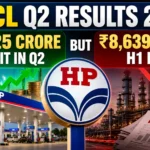
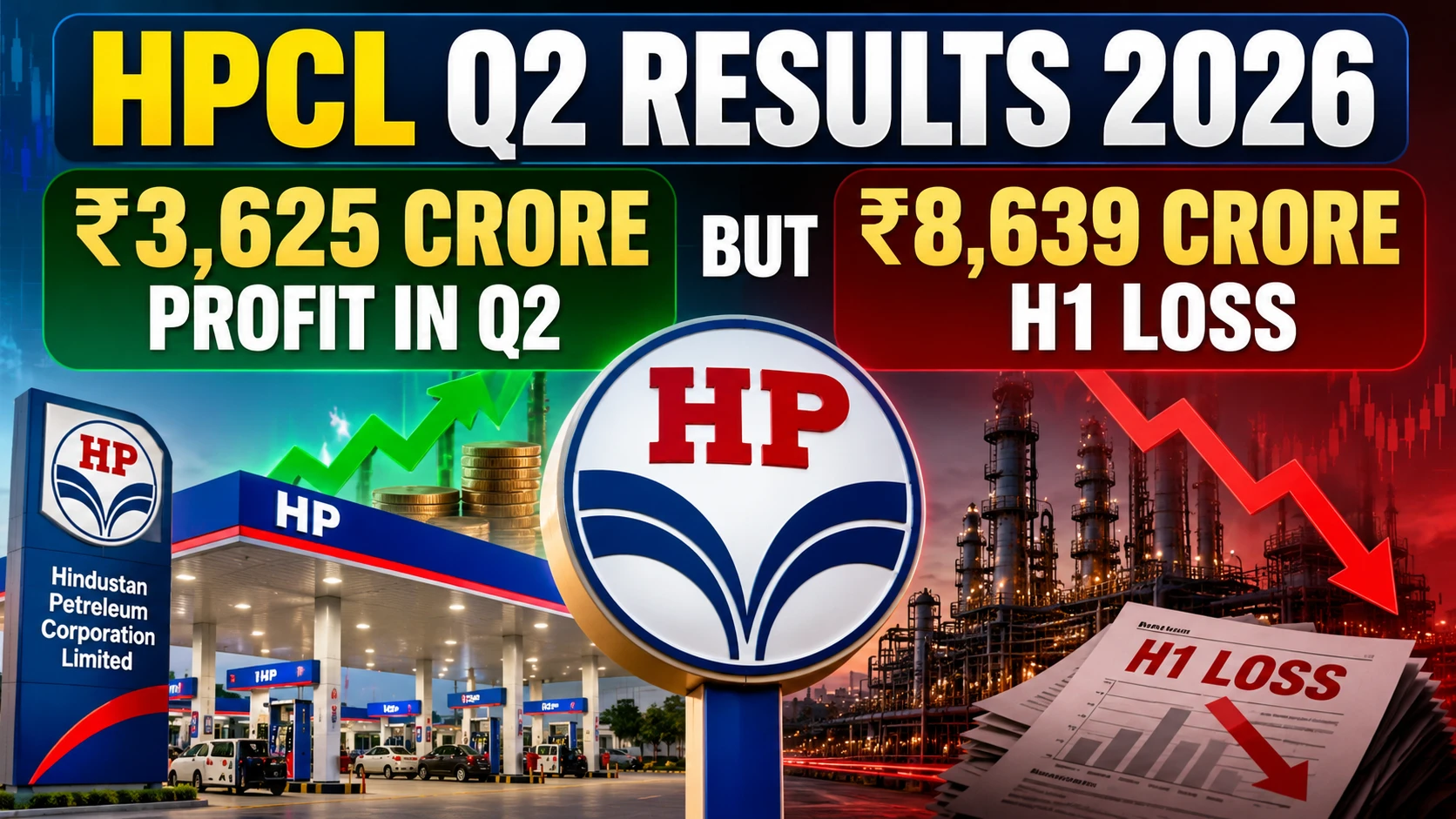
- Hindustan Petroleum Corporation Limited (HPCL) reported consolidated net profit of ₹3,625.22 crore in Q2 FY27, compared with a ₹12,264.67 crore loss in Q1 FY27.
- The quarterly profit was nevertheless 6.1% below the ₹3,859.30 crore reported in Q2 FY26.
- Consolidated revenue from operations increased approximately 26% year-on-year to around ₹1.39 lakh crore.
- Standalone net profit was ₹3,482.62 crore, down approximately 9% year-on-year.
- Despite returning to profit in Q2, HPCL recorded a consolidated net loss of ₹8,639.45 crore during April–September 2026.
- Q2 gross refining margin reached approximately $32.15 per barrel, compared with $8.80 a year earlier.
- Higher crude oil costs, weak fuel-marketing margins and tax expenses continued to weigh on profitability.
- The company reported commissioning a blue-hydrogen unit at its Visakh refinery.
HPCL Returns to Profit in September Quarter
Hindustan Petroleum Corporation Limited reported a significant recovery in its September-quarter financial performance after posting a substantial loss during the preceding quarter.
The government-controlled oil marketing and refining company announced its Q2 FY27 results on Thursday, 22 October 2026.

- 📦 Package Contains: 1 x Deep Diya Curtain LED Light (3 Meter, 108 LEDs) 🪔
- 🪔 Traditional Deep Diya Design: 6+6 hanging diyas bring festive charm to your home.
- 💡 108 Warm White LEDs: Soft and elegant lighting creates a cozy and inviting atmosphere.
Consolidated profit after tax reached ₹3,625.22 crore for the quarter ended 30 September.

- Rope light with 120 LEDs/m for best light output and no dark spots
- 50m LED AC rope light with IP65 protection, especially for outdoor application
- Plug and Play SKU
This represented a sharp improvement from the ₹12,264.67 crore consolidated loss recorded during April–June.
However, the company remained below its year-earlier performance. Consolidated profit declined approximately 6.1% compared with ₹3,859.30 crore in Q2 FY26.
The results reflect contrasting trends across HPCL’s operations.
Refining margins improved sharply, but selling petrol, diesel and LPG remained challenging because international energy costs were elevated.
The main issue is not simply whether HPCL returned to profit in one quarter, but whether the recovery can continue while fuel-marketing margins remain under pressure.
HPCL Q2 FY27 Financial Highlights
| Financial indicator | Q2 FY26 | Q2 FY27 |
|---|---|---|
| Consolidated net profit | ₹3,859.30 crore | ₹3,625.22 crore |
| Standalone net profit | ₹3,830.37 crore | ₹3,482.62 crore |
| Consolidated revenue from operations | Approximately ₹1.10 lakh crore | Approximately ₹1.39 lakh crore |
| Q2 gross refining margin | $8.80/barrel | $32.15/barrel |
| Refinery crude throughput | 6.57 MMT | 6.20 MMT |
Sources: HPCL’s 22 October exchange-filing information, company earnings disclosures and financial reporting. Values are rounded where indicated.
The difference between consolidated and standalone profit is important.
Standalone results describe HPCL as a reporting company, while consolidated statements include relevant subsidiaries, joint ventures and other entities according to the applicable accounting standards.
Investors should use matching definitions when comparing performance across periods.
Why Did HPCL Recover From Its Q1 Loss?
HPCL’s return to quarterly profitability was supported by a substantial improvement in refining economics.
A refinery purchases crude oil and processes it into products such as petrol, diesel, LPG and aviation turbine fuel.
Its financial performance depends partly on the difference between the prices of refined products and the cost of crude oil.
This is reflected in the gross refining margin, commonly called GRM.
In Q2 FY27, HPCL reported a GRM of approximately $32.15 per barrel.
The comparable margin a year earlier was $8.80 per barrel.
That improvement helped offset part of the pressure in its fuel-marketing operations.
However, the company still faced elevated input costs and weaker profitability from the sale of certain petroleum products.
Higher refining margins and lower fuel-marketing margins can occur at the same time because the two businesses operate at different stages of the supply chain.
Read Also: Adani Energy Q2 Results 2026: Profit Jumps 145% to ₹1,364 Crore, Smart Meter Business Expands
Why Did Profit Still Fall Year-on-Year?
Although HPCL’s quarterly revenue rose substantially, its consolidated profit was lower than a year earlier.
Reuters identified higher crude oil costs and increased tax expenses among the factors affecting the financial results.
Higher international crude prices increase the cost of supplying petroleum products.
If retail selling prices do not rise by the same amount, the amount earned from marketing each litre of fuel can decline.
Total operating expenses also increased.
This means that greater sales revenue does not necessarily produce greater profit.
For investors, the relevant question is how much of the company’s revenue growth can be retained after crude purchases, operating expenditure, financing costs and taxes.
HPCL’s First-Half Results Still Show a Major Loss
The recovery in Q2 did not fully offset the loss recorded in Q1.
| Consolidated period | Net result |
|---|---|
| Q1 FY27: April–June | −₹12,264.67 crore |
| Q2 FY27: July–September | +₹3,625.22 crore |
| H1 FY27: April–September | −₹8,639.45 crore |
This table helps explain why the company can report a profitable second quarter while still recording a substantial loss for the first six months.
In the corresponding first half of FY26, HPCL had reported a consolidated profit of approximately ₹7,970 crore.
The year-on-year reversal highlights the effect of changing oil-market conditions.
Investors should therefore avoid describing the Q2 recovery as a complete turnaround in full-year earnings.
More Stories

India October PMI 2026: Business Growth Hits 4-Month High, but Hiring Slows
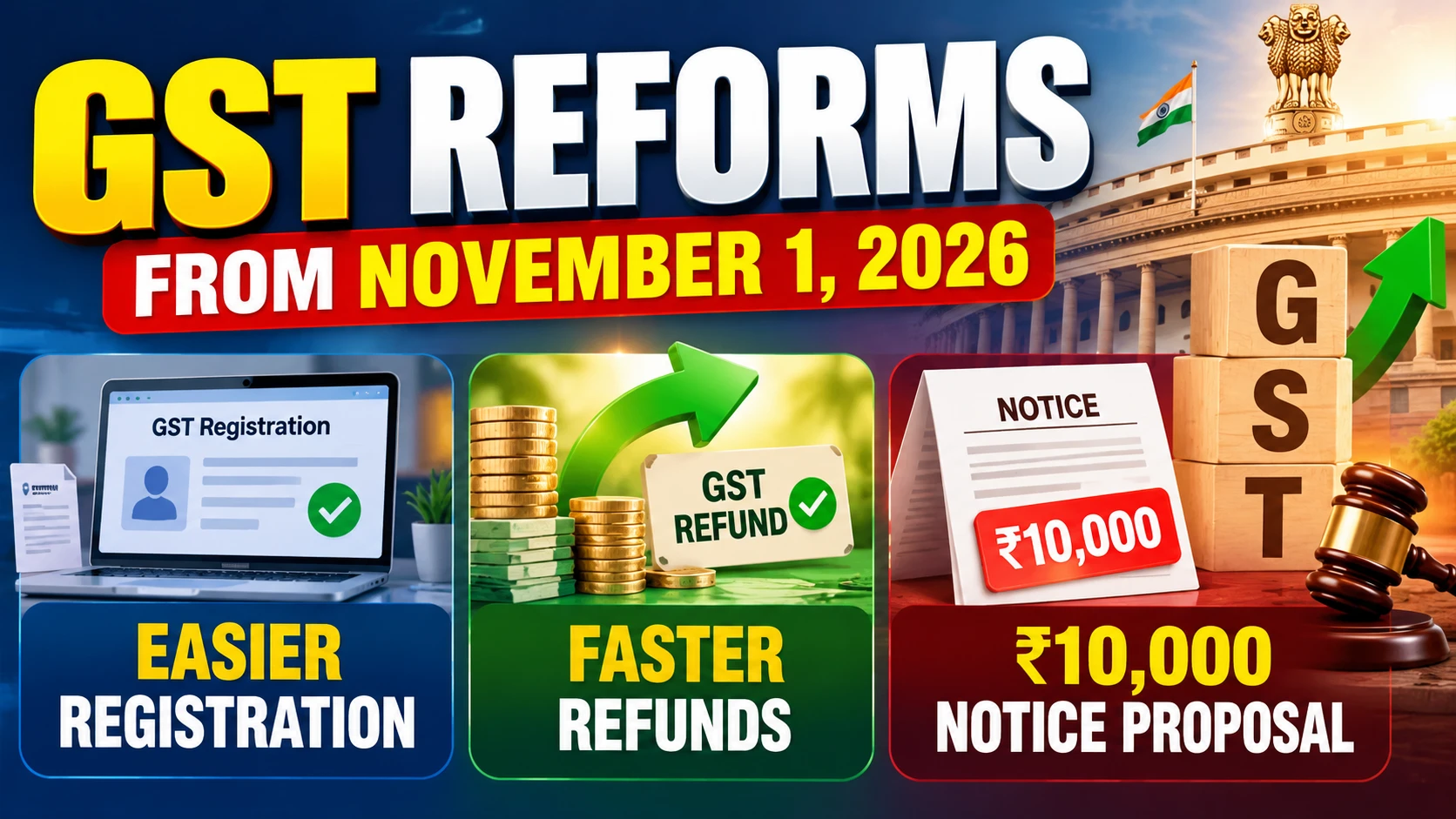
GST Reforms From November 1, 2026: Easier Registration, Faster Refunds and ₹10,000 Notice Proposal
HPCL Q2 Results 2026: ₹3,625 Crore Profit After Q1 Loss, but Half-Year Remains in Red
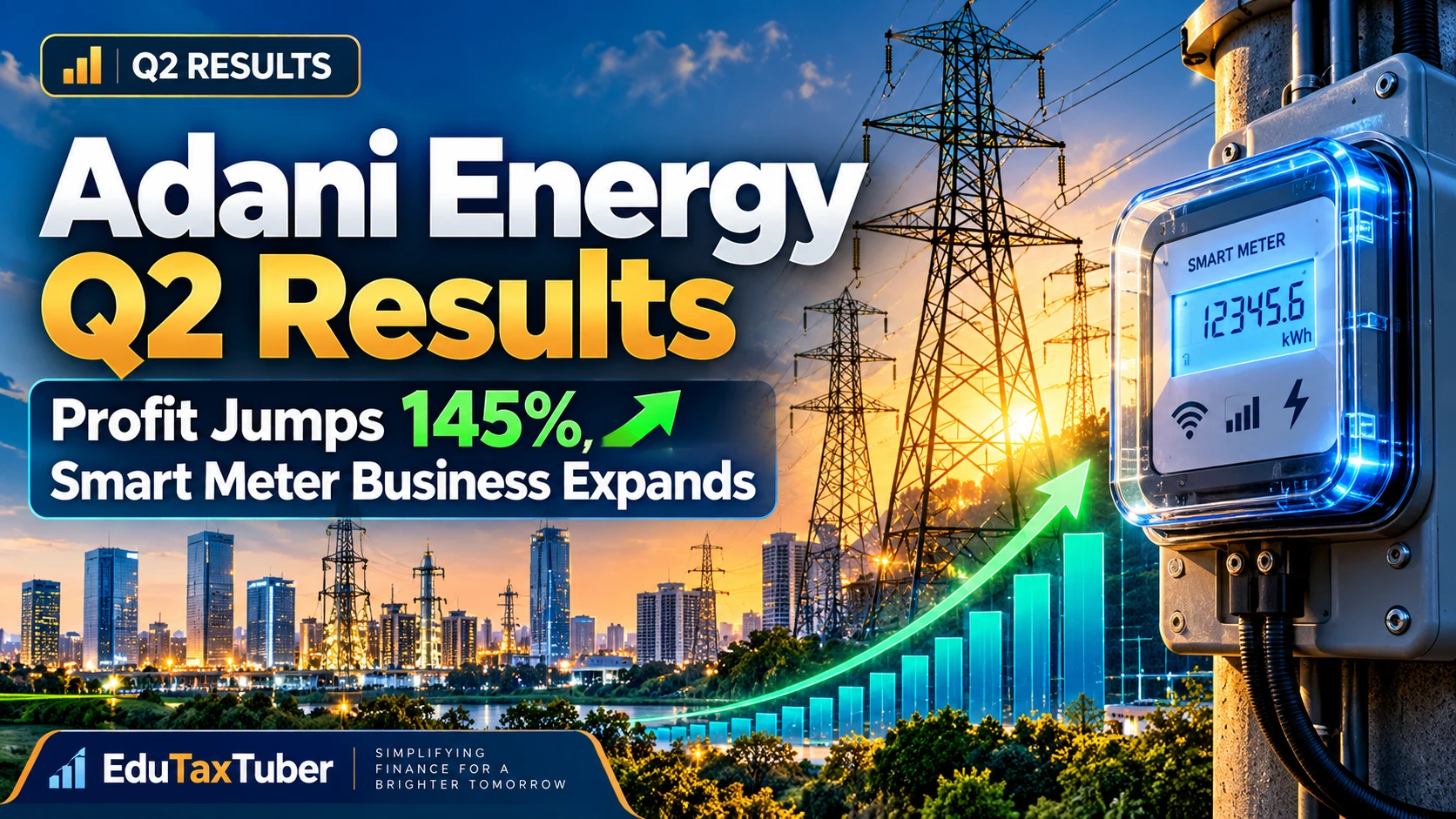
Adani Energy Q2 Results 2026: Profit Jumps 145% to ₹1,364 Crore, Smart Meter Business Expands
The remaining quarters of FY27 will be important.
Refining Margin Reaches $32.15 Per Barrel
HPCL’s Q2 gross refining margin of $32.15 per barrel was significantly above the comparable year-earlier figure.
For the entire April–September half-year, the average GRM was $27.89 per barrel, compared with $5.95 a year earlier.
These two values describe different periods:
- $32.15: the July–September quarter.
- $27.89: the April–September half-year average.
The distinction is important because comparing figures from different periods can produce misleading conclusions.
Part of the margin improvement reflected inventory-related effects.
A refinery may benefit when the market value of crude oil or refined products rises relative to the cost of inventory purchased earlier.
Such gains can strengthen earnings during a particular period, but they should not automatically be treated as permanent.
Refinery Throughput and Capacity Utilisation
HPCL’s refineries processed 6.20 million metric tonnes (MMT) of crude oil during Q2 FY27.
The company reported overall refinery capacity utilisation of approximately 100%.
Its two principal refineries contributed as follows:
| Refinery | Crude throughput | Capacity utilisation |
|---|---|---|
| Visakh refinery | 3.60 MMT | 95% |
| Mumbai refinery | 2.60 MMT | 109% |
| Total | 6.20 MMT | Approximately 100% |
The Mumbai refinery’s utilisation exceeding 100% reflects throughput relative to its rated capacity, not an error in the data.
Although utilisation remained strong, total quarterly throughput was below the 6.57 MMT processed in Q2 FY26.
Therefore, the improvement in refining profitability was not simply a result of processing more crude oil.
The value earned from each barrel played an important role.
Petrol and Diesel Sales Increase
HPCL reported total sales, including exports, of approximately 12.73 MMT during the September quarter.
This represented growth of around 5.5% year-on-year.
Domestic sales increased approximately 4.9%.
Combined petrol and diesel sales reached 7.78 MMT, representing growth of around 10%.
LPG sales were approximately 2.03 MMT.
The company’s distribution network included 25,245 retail fuel outlets at the end of September 2026.
These figures suggest continued demand for petroleum products.
Nevertheless, higher sales volume does not guarantee higher earnings when the per-litre marketing margin is weak.
Why Were Fuel-Marketing Margins Under Pressure?
Oil marketing companies purchase crude oil or refined products and sell fuels through wholesale and retail channels.
When international crude prices increase sharply, their costs can rise.
Retail fuel prices may not move immediately or proportionately with international benchmarks.
This creates pressure on the difference between the purchase and selling prices.
During the first half of FY27, elevated crude oil prices were an important factor affecting Indian fuel retailers.
HPCL’s financial disclosures identified pressure from subdued marketing margins on certain petroleum products.
However, investors should not assume that a particular reported industry margin applies equally to every HPCL product, location or transaction.
Actual margins depend on product mix, procurement costs, taxes and other operating factors.
LPG Compensation: What Did HPCL Recognise?
HPCL’s disclosures also refer to compensation related to historical domestic LPG under-recoveries.
The Ministry of Petroleum and Natural Gas had communicated a compensation amount of ₹7,920 crore in October 2025.
The amount was scheduled to be recognised over 12 equal monthly instalments beginning in November 2025.
For April–September 2026, HPCL recognised six instalments totalling ₹3,960 crore, included under sales of products.
This is not a newly announced ₹3,960 crore support package dated 22 October 2026.
It relates to an earlier compensation arrangement recognised during the current reporting period.
The company also disclosed a cumulative unrecognised negative LPG buffer of approximately ₹18,048.82 crore as of 30 September 2026.
That balance should not be interpreted as money already approved for reimbursement.
HPCL Commissions Blue-Hydrogen Unit
Alongside its financial results, HPCL reported commissioning what it described as India’s first refinery blue-hydrogen unit at the Visakh refinery.
The unit uses technology associated with hydrogen production and carbon-management processes.
Blue hydrogen generally refers to hydrogen produced from fossil-based feedstocks using carbon-capture arrangements.
Its overall environmental performance depends on factors including feedstock, energy use and the effectiveness of carbon capture.
The announcement is a technology and infrastructure development.
It should not be interpreted as evidence that the unit will immediately make a large contribution to quarterly profit.
Future disclosures will help assess operating performance and economic benefits.
Pipeline Expansion and Capital Spending
HPCL reported completing the mechanical construction of a 201-kilometre LPG pipeline between Haldia and Panagarh in West Bengal.
The pipeline was in the pre-commissioning stage.
Mechanical completion means construction has reached an important milestone, but it does not necessarily mean commercial operations have started.
The company reported capital expenditure of approximately ₹2,085 crore during Q2 and ₹3,819 crore during the first half.
These investments support refining, distribution and associated infrastructure.
However, major capital projects require funding, and their returns may be realised over several years.
Read Also: FPI Outflows October 2026: Foreign Investors Withdraw ₹52,100 Crore From Indian Stocks
Investors should monitor commissioning schedules, financing costs and actual cash generation.
What Happened to HPCL Shares?
HPCL shares closed at approximately ₹340.80 on 22 October 2026, down around 2% for the session.
This is a historical closing-price observation, not a live quote for 23 October.
The share-price movement should not automatically be attributed entirely to the results, as market expectations and trading conditions can also affect prices.
The earnings conference call scheduled for 23 October may provide additional insight into management’s assessment of crude prices, margins and future operations.
Any new guidance from that call should be checked before updating this article.
What Should Investors Monitor Next?
Investors evaluating HPCL may wish to track four areas.
First, changes in international crude oil prices and their effect on marketing margins.
Second, the sustainability of refining margins once inventory-related effects normalise.
Third, the company’s debt, interest costs and operating cash flows.
Fourth, the effect of LPG under-recoveries and any future compensation arrangements.
HPCL’s share valuation should be considered alongside these factors rather than based only on the strong sequential improvement in quarterly profit.
Frequently Asked Questions
1. What was HPCL’s Q2 FY27 consolidated profit?
HPCL reported consolidated profit of ₹3,625.22 crore.
2. Did HPCL’s profit increase year-on-year?
No. Consolidated profit declined approximately 6.1% compared with Q2 FY26.
3. Why is Q2 considered a recovery?
The company returned to profit after a consolidated loss of ₹12,264.67 crore during Q1 FY27.
4. What was HPCL’s first-half result?
It recorded a consolidated net loss of ₹8,639.45 crore during April–September 2026.
5. What was HPCL’s standalone profit?
Approximately ₹3,482.62 crore, down about 9% year-on-year.
6. What was the Q2 gross refining margin?
Approximately $32.15 per barrel.
7. Does higher refinery profit mean petrol prices will fall?
Not necessarily. Retail fuel prices depend on crude costs, taxes, market conditions and pricing decisions.
8. Did HPCL announce a new dividend with these results?
No new Q2 dividend was established in the reviewed earnings coverage. Readers should refer to subsequent stock-exchange announcements for any corporate-action update.
9. Are HPCL shares guaranteed to recover?
No. Returns depend on valuation, margins, earnings, cash flows and broader market conditions.
Conclusion
HPCL’s Q2 FY27 results show a meaningful recovery from the preceding quarter’s losses.
The company generated ₹3,625 crore of consolidated profit and benefited from exceptionally strong refining margins.
However, higher crude costs, weak fuel-marketing margins and tax expenses continued to affect profitability.
Its ₹8,639 crore first-half consolidated loss highlights the scale of the challenge.
For investors, the key issue is whether HPCL can sustain the quarterly recovery while improving marketing margins and controlling financing and operating costs.
Sources
- HPCL — Official Financial Results
- HPCL — Stock-Exchange Announcements
- Reuters — HPCL Profit Declines Amid Higher Costs
- Moneycontrol — HPCL Q2 Consolidated Earnings
- Financial Express — HPCL Refinery and Marketing Performance
Editorial disclaimer: This article was prepared with AI assistance and editorial research using company filing information and financial reporting. It is intended for general education, not personalised investment, legal, financial or tax advice. Company figures, projections and market conditions may change. EduTaxTuber disclaims liability for losses arising from reliance on inaccurate or outdated information to the extent permitted by applicable Indian law.
Disclaimer: EduTaxTuber provides content for general educational and informational purposes only. While we make reasonable efforts to keep the information accurate and updated, laws, regulations, market conditions, software features, and other information may change. Some content may be created or assisted by AI tools and may contain errors or omissions. Readers should verify important information with official sources or qualified professionals before making any tax, legal, financial, investment, business, or other decisions. EduTaxTuber does not guarantee the completeness or accuracy of the information and does not provide professional advice.
