








Summary
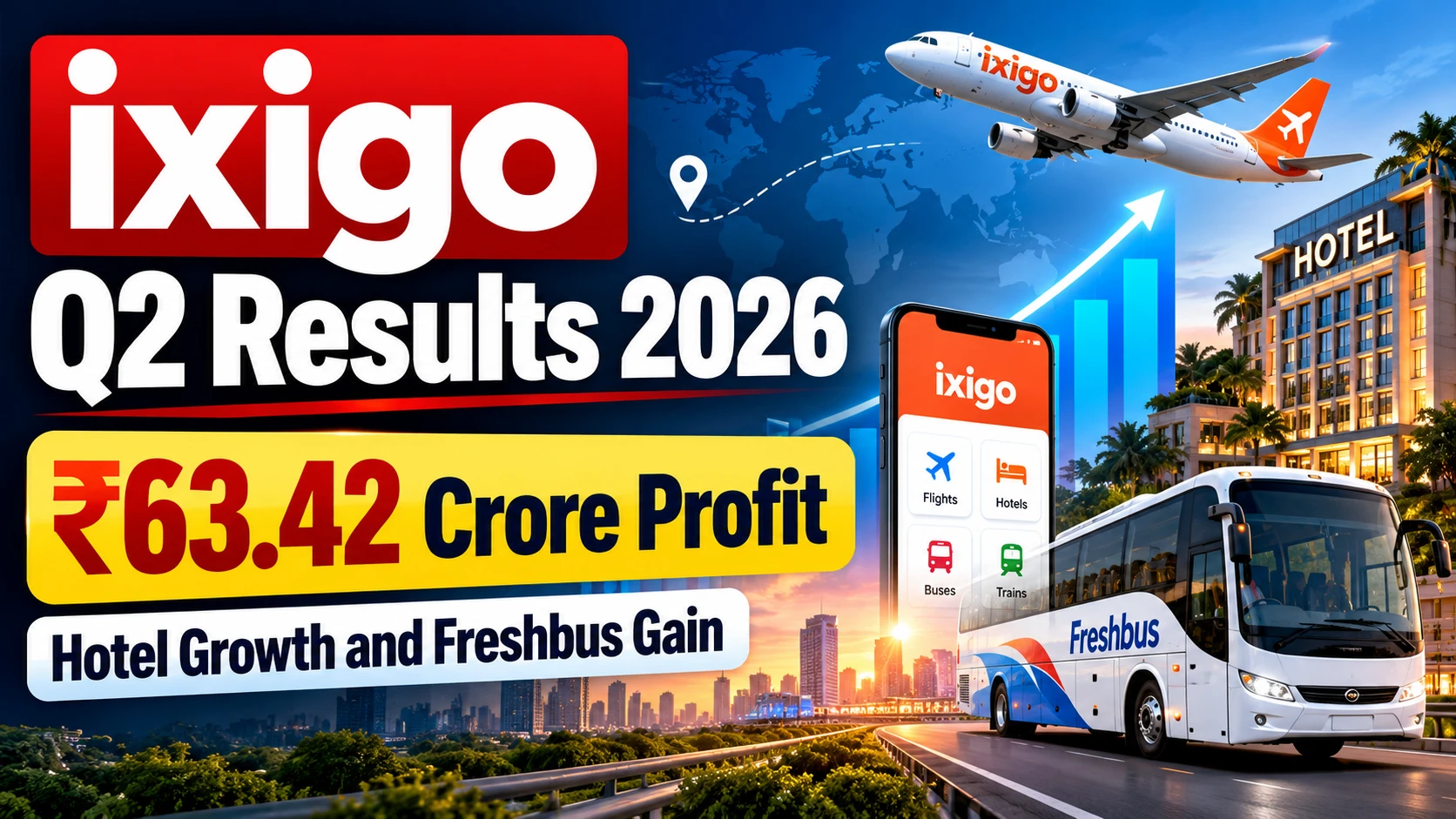
- ixigo reported consolidated profit after tax of ₹63.42 crore for July–September 2026, compared with a loss of ₹3.46 crore a year earlier.
- Revenue from operations rose 13% year-on-year to ₹320.96 crore.
- Gross transaction value increased 22% to ₹5,304.47 crore.
- The quarter included an exceptional gain of approximately ₹40.7 crore from reducing its stake in Freshbus.
- Adjusted EBITDA declined 17% to ₹23.58 crore.
- Hotel-booking gross transaction value reached ₹111 crore, increasing approximately 159% year-on-year.
ixigo Q2 FY27 Results: Latest Update
Online travel-booking platform ixigo has reported its highest quarterly profit after tax for the September 2026 quarter, supported by business growth and a substantial exceptional investment gain.
Its parent company, Le Travenues Technology Limited, announced the results on 17 October 2026.
Consolidated profit after tax reached ₹63.42 crore, compared with a loss of ₹3.46 crore in the corresponding period of the previous financial year.
Revenue from operations increased 13% to ₹320.96 crore.
Although the profit figure is striking, investors must examine its composition carefully.
The quarter included an exceptional gain of approximately ₹40.7 crore arising from the partial sale of the company’s holding in Freshbus.
Meanwhile, adjusted EBITDA declined year-on-year because the company increased spending on technology, employees and expansion into hotel bookings.



The important distinction is that record reported profit and declining adjusted operating earnings occurred in the same quarter
ixigo Q2 FY27 Financial Highlights
| Financial indicator | Q2 FY26 | Q2 FY27 |
|---|---|---|
| Revenue from operations | ₹284.23 crore | ₹320.96 crore |
| Gross transaction value | ₹4,347.50 crore | ₹5,304.47 crore |
| Contribution margin | ₹109.58 crore | ₹124.86 crore |
| Adjusted EBITDA | ₹28.48 crore | ₹23.58 crore |
| Profit after tax | −₹3.46 crore | ₹63.42 crore |
Source: ixigo’s official Q2 FY27 earnings release, dated 17 October 2026.
The results show growth in transaction volumes and revenue, alongside a decline in adjusted EBITDA.
This combination makes profitability quality particularly important when evaluating the business.
Why Did ixigo’s Profit Jump to ₹63.42 Crore?
The company reported a substantial improvement from the loss recorded in the previous year’s September quarter.
However, a major contributor was not part of its ordinary travel-booking revenue.
ixigo reduced its holding in Freshbus, an intercity electric-bus operator.
Its ownership declined from 25.66% to 8.27%, and Freshbus ceased to be classified as an associate.
The transaction generated an exceptional gain of approximately ₹40.7 crore.
According to ixigo’s management, this gain increased reported profit before tax to about ₹71.7 crore and profit after tax to ₹63.4 crore.
The company separately reported an adjusted pre-tax profit measure of ₹33.53 crore, representing 37% year-on-year growth after excluding specified exceptional and other comparison-distorting items.
That adjusted measure is not the same as reported profit after tax.
Investors should therefore avoid treating the entire ₹63.42 crore as recurring earnings from selling railway, bus, flight and hotel bookings.
What Is the Freshbus Transaction?
Freshbus operates intercity electric-bus services.
ixigo had previously invested in the company to understand and support the development of electric intercity transport.
Its management explained that ixigo primarily operates a technology and travel-distribution business, whereas Freshbus operates physical transport services involving vehicles, routes, crews and charging infrastructure.
Reducing ownership allows ixigo to focus on its travel-platform business.
The two companies can continue maintaining commercial relationships even after ixigo reduces its equity stake.
Importantly, gains from selling an investment are not normally expected to recur every quarter.
Future reported profits will therefore depend more heavily on operating performance and other income or expense items.
ixigo Revenue Rises 13% to ₹320.96 Crore
Revenue from operations increased from ₹284.23 crore to ₹320.96 crore.
This represents approximately 13% year-on-year growth.
Gross transaction value, or GTV, increased 22% to ₹5,304.47 crore.
GTV represents the aggregate amount paid by users for bookings, including relevant taxes, fees and service charges, before certain adjustments.
It is not equivalent to ixigo’s recognised revenue.
For example, the value of an airline ticket booked through the platform may be included in GTV, even though ixigo does not recognise the entire ticket price as its own revenue.
The company’s revenue generally reflects the applicable economics of its travel-booking and related services.
This distinction matters when comparing online travel agencies with airlines, hotels or transport operators.
Hotels Business Becomes an Important Growth Driver
One of the most important developments in ixigo’s quarterly announcement was the decision to report hotels as a separate business segment.
Hotel-booking GTV reached approximately ₹111 crore, representing growth of about 159% year-on-year.
Hotel revenue rose more than sixfold to approximately ₹8.1 crore.
The company reported a gross take rate exceeding 12% in the segment.
It also disclosed that more than 86% of hotel bookings originated from customers already using its travel platforms.
This cross-selling opportunity is important because travellers booking trains or buses may also need accommodation at their destination.
ixigo reported direct relationships with more than 12,000 hotels across approximately 1,100 towns.
However, rapid growth does not mean the hotel segment is already profitable.
Its contribution margin was approximately negative ₹1.2 crore during the quarter.
The company also incurs hotel-related technology, employee and development expenditure outside the segment’s direct contribution calculation.
Why Did Adjusted EBITDA Decline 17%?
Adjusted EBITDA fell from ₹28.48 crore to ₹23.58 crore despite revenue growth.
Management attributed the decline largely to higher investment expenditure.
Employee costs excluding share-based compensation increased by approximately ₹16.9 crore year-on-year, while technology costs rose by around ₹4.5 crore.
A meaningful portion of this spending supported the hotels business and broader technology projects.
The company estimates that approximately ₹10 crore of the year-on-year increase in certain group costs related to developing hotels.
These investments may support future expansion, but their financial benefits are not guaranteed.
Investors should monitor whether the company eventually converts higher bookings and revenue into stronger recurring operating earnings.
More Stories

ixigo Q2 Results: Profit Reaches ₹63.42 Crore, Revenue Rises 13% as Hotels Business Expands
FPI Outflows October 2026: Foreign Investors Withdraw ₹52,100 Crore From Indian Stocks

Paras Healthcare IPO 2026: ₹1,450 Crore Issue, Price Band, Dates and Review
57th GST Council Meeting 2026: Major Reforms Proposed for Taxpayers and Businesses


Train Bookings: Recovery and Competition
Trains remain a major component of ixigo’s platform.
The company reported approximately 29 million train passenger segments during the quarter, representing 19% sequential growth.
Management estimated that its share of the online travel agency rail market increased from approximately 63% to 64%.
Train revenue increased 16% year-on-year to approximately ₹149.1 crore.
The company also incorporated its food-on-trains operation, Zoop, into the Trains segment and restated comparative segment information.
However, sequential contribution margins experienced pressure as ixigo invested in attracting customers during the festive booking period.
Investors should distinguish increasing passenger volumes from improving earnings per booking.
Bus Bookings Show Strong Growth
ixigo’s AbhiBus business also recorded expansion.
Bus passenger segments increased 28% year-on-year to approximately 7.7 million.
Bus GTV rose 32% to ₹753 crore.
Revenue reached approximately ₹81 crore, up 24%, while contribution margin increased to ₹43.1 crore.
The company attributed growth to greater transport supply, brand investment and demand linked to limited confirmed train-ticket availability.
Bus-booking growth remains an important part of ixigo’s strategy to serve travellers across smaller cities.
Flight Business Faces Capacity and Fare Pressures
The flight business experienced a more challenging quarter.
According to management, airline capacity constraints and elevated ticket prices affected bookings.
Flight passenger segments declined around 10% sequentially to approximately 2.6 million.
However, flight GTV increased 37% year-on-year, reflecting higher average transaction values and other factors.
These figures show why ticket value and passenger numbers should be assessed separately.
Higher airfares may lift booking value without producing an equivalent increase in passengers or travel-platform profitability.
What Are the Major Risks for Investors?
The quarter’s results highlight several issues.
First, the exceptional Freshbus gain materially boosted reported profit.
Second, adjusted EBITDA declined while investment spending increased.
Third, the hotel business is expanding rapidly but remains at an early stage of development.
Fourth, airline capacity and fare conditions can influence the flight-booking segment.
Finally, the company operates in competitive travel markets where discounts, service quality and customer acquisition costs affect margins.
Investors should also consider the stock’s valuation before making investment decisions.
What Should Shareholders Watch Next?
Investors should monitor growth in hotel bookings, contribution margins, adjusted EBITDA and operating cash flows.
The company’s ability to cross-sell hotel accommodation to existing rail and bus customers may become an important performance indicator.
Another key consideration is whether revenue growth in established segments remains sufficient to fund investment in newer operations.
Future financial statements will help establish whether the company can sustain operating profitability without exceptional investment gains.
Conclusion
ixigo’s Q2 FY27 results demonstrate growth across important parts of its travel-booking platform.
Revenue rose 13%, GTV increased 22% and hotel bookings expanded sharply.
However, the record profit of ₹63.42 crore included a substantial ₹40.7 crore exceptional gain, while adjusted EBITDA declined 17%.
Disclaimer: EduTaxTuber provides content for general educational and informational purposes only. While we make reasonable efforts to keep the information accurate and updated, laws, regulations, market conditions, software features, and other information may change. Some content may be created or assisted by AI tools and may contain errors or omissions. Readers should verify important information with official sources or qualified professionals before making any tax, legal, financial, investment, business, or other decisions. EduTaxTuber does not guarantee the completeness or accuracy of the information and does not provide professional advice.
