







Delhi CJP Protest: Leaders Detained, AAP and Left Join; Congress Stays Away
Delhi CJP protest on October 10, 2026: Police imposed security restrictions and detained demonstrators as the Cockroach Janta Party (CJP) and supporting political groups planned a protest at Jantar Mantar. The demonstration focused on concerns over electoral-roll revisions and demands for the resignation of Chief Election Commissioner Gyanesh Kumar.
Key Highlights
- Police detained CJP organisers and several opposition figures amid restrictions on the planned Jantar Mantar protest.
- AAP and Left groups backed the mobilisation; the Congress did not formally join the CJP demonstration.
- The dispute centres on electoral-roll revisions and whether legitimate voters were wrongly excluded.
- Police cited security concerns and the timing of the protest application in denying permission for the Jantar Mantar gathering.
What Happened at the Delhi CJP Protest?
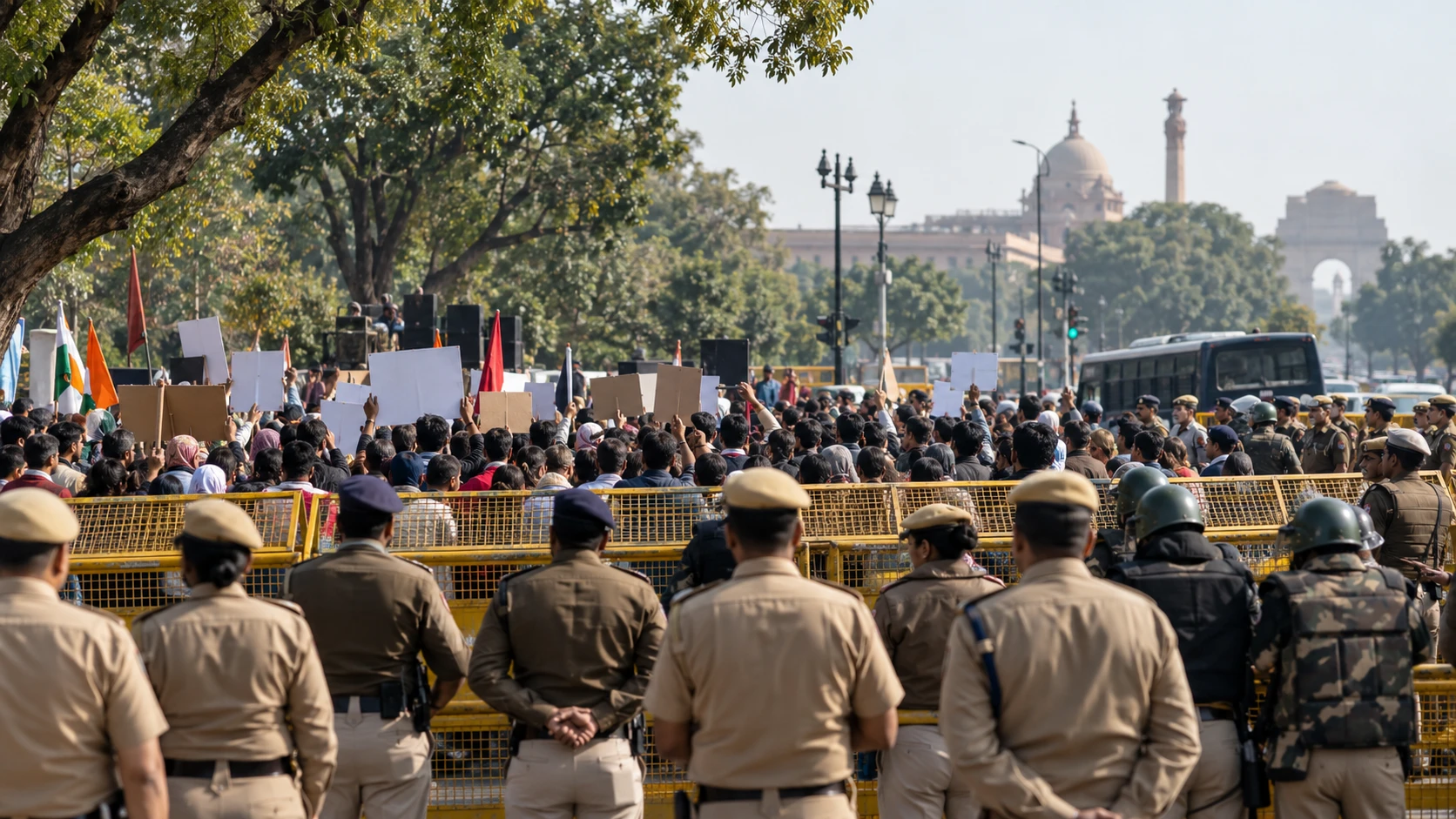
Security personnel sealed approaches to Jantar Mantar and established checkpoints across parts of the national capital. More than 2,000 detentions were reported during the day, although the tally changed as events unfolded. Smaller groups continued demonstrations away from the designated protest site.
Delhi Police declined permission for the demonstration, citing security concerns and an application submitted on October 7, later than the prescribed notice period. Organisers criticised the restrictions and maintained that their protest was intended to be peaceful. Detention does not in itself establish that an individual has been formally arrested or charged.
Who Is Behind the Protest?
The protest was organised by the Cockroach Janta Party, a youth-led movement associated with activist Abhijeet Dipke, with support from student organisations and other groups. The organisers called for Chief Election Commissioner Gyanesh Kumar to step down following controversy over the revision of voter lists. Organisers Abhijeet Dipke, Saurav Das and Ashutosh Ranka were detained after arriving in Delhi by air.
Other participants attempted marches at alternative locations after access to the planned venue was restricted. Those detained also included student representatives, campaigners, lawyers and public figures, including Yogendra Yadav and Prashant Bhushan.
Which Political Parties Joined — and Which Stayed Away?
AAP and Left parties
The Aam Aadmi Party and Left political organisations supported the protest. Reports identified AAP leader Arvind Kejriwal and several Left leaders among political figures detained as authorities enforced restrictions. Kejriwal criticised the policing of the demonstration and accused the central government of suppressing dissent. Those are his political allegations, not independently established findings.
Trinamool Congress
Trinamool Congress figures also became involved in the day’s events. TMC leader Mamata Banerjee and party colleagues were also reported detained outside her Delhi residence. Accounts of participation evolved during the day; advance statements of support should not be confused with confirmation that a party delegation reached the designated protest venue.
Congress
Unlike AAP and Left organisations, Congress did not formally join the October 10 CJP event. This distinction is important: opposition to aspects of the electoral-roll revision does not automatically mean participation in the same protest. Congress leaders have separately questioned the voter-list exercise.
Why Are Protesters Opposing the Electoral-Roll Revision?
The dispute centres on the Special Intensive Revision, an exercise intended to examine and update electoral registers. Opposition figures and CJP organisers alleged that voter deletions could have excluded eligible electors and affected electoral fairness. Reuters reported that approximately 130 million entries were removed in the exercise, including records linked to people reported as having moved, died or not been traceable.
These figures refer to voter entries and categories within a verification process; they should not be taken as proof that 130 million eligible voters were improperly disenfranchised. The Election Commission has said that the process aims to improve the accuracy of electoral rolls and that eligible people who were removed incorrectly can seek re-enrolment. The BJP has denied accusations of political manipulation and criticised opposition claims.
Read Also: Inherited Family Gold? How to Prove Ownership and Source of Jewellery to Income Tax Department
The central issue remains whether the revision was conducted consistently, with adequate opportunities for affected voters to correct errors, and whether the published records support the competing claims. Readers should distinguish verified administrative data from political allegations about intent or electoral outcomes.
Delhi Metro, Roads and Public Services Affected
The restrictions extended beyond the protest venue. Reporting from Reuters and The Indian Express described barricades and road checkpoints, disruptions near central Delhi, and closures affecting metro stations and markets. Some restrictions were precautionary and others changed as the day progressed. Travellers should consult Delhi Metro Rail Corporation, Delhi Traffic Police and railway advisories for current operational details rather than relying on earlier closure lists.
For local businesses, commuters and visitors, the immediate impact was disruption to movement through parts of the city. Public-safety arrangements and restrictions on assembly became a separate subject of political criticism, alongside the original disagreement over the electoral rolls.

What Did Police and the Opposition Say?
Police authorities argued that restrictions were necessary because of security considerations and procedural requirements relating to the planned gathering. Opposition leaders and organisers argued that preventing demonstrators from assembling and detaining campaigners restricted peaceful political expression. Neither position, on its own, resolves the factual dispute about the underlying voter-list revision.
Reuters also reported comments from BJP figures who rejected accusations of wrongdoing and contended that opponents were using the demonstrations for political purposes. A balanced assessment requires attention both to public-order considerations and to the rights and legal procedures governing peaceful assembly.
What Happens Next?
CJP representatives indicated they intended to continue pressing for the Chief Election Commissioner’s resignation. Further demonstrations, legal challenges or political responses will depend on decisions by organisers, authorities and the courts. No future action should be treated as confirmed unless officially announced.
The wider electoral-roll controversy is likely to remain under scrutiny as parties seek clarification on deletion categories, verification procedures and safeguards for eligible voters. EduTaxTuber will update this report if significant, independently verified developments emerge.
Frequently Asked Questions
What is CJP demanding in Delhi?
The Cockroach Janta Party is demanding the resignation of Chief Election Commissioner Gyanesh Kumar and raising concerns about revisions to voter lists.
Did Congress join the CJP protest?
Reports available on October 10 indicated that Congress did not formally participate in the CJP-organised gathering, although Congress figures have separately criticised the electoral-roll revision.
Which parties supported the protest?
AAP and Left organisations supported the mobilisation. TMC leaders were also involved in the day’s events, including reported detentions.
Why was the demonstration restricted?
Delhi Police cited security concerns and the timing of the request to hold the event at Jantar Mantar.
Sources and Editorial Note
Sources checked October 10, 2026: Reuters; The Indian Express; LiveMint. This is an original summary prepared with AI assistance from attributed reporting. Figures, restrictions and detention statuses may change as official updates arrive. The draft requires editorial review before publication.