










EPFO Wage Ceiling ₹25,000 in 2026: New PF Deduction, EPS Pension and Salary Impact Explained
The wage ceiling for India’s Employees’ Provident Fund Organisation (EPFO) has been raised from ₹15,000 to ₹25,000 per month, encompassing more salaried workers under the statutory provident fund and social security system.
Summary
- The statutory EPFO wage ceiling increased from ₹15,000 to ₹25,000.
- The revision took effect on September 17, 2026.
- More than 51 lakh additional employees are expected to become eligible for mandatory coverage.
- The employee’s standard PF contribution rate remains 12% of applicable contributory wages.
- A 12% contribution on a ₹25,000 wage base equals ₹3,000 per month.
- The employer also contributes under the applicable framework, with the amount allocated between EPF and EPS as required.
- The EPS contribution ceiling can rise to approximately ₹2,083 per month where the relevant provisions apply.
- The revised limit does not mean everyone will receive a ₹25,000 salary.
What Is the EPFO Wage Ceiling?
A legislative level known as the EPFO pay limit is used to calculate coverage and contributions under relevant provident fund, pension, and deposit-linked insurance policies.
Before the revision, the relevant threshold was ₹15,000 per month.
The government has now increased it to ₹25,000.
This is particularly relevant to employees who were previously outside mandatory coverage because their wages exceeded the earlier limit.
The revision also affects how contributions are calculated for employees whose contributions were restricted to the statutory ceiling, subject to the applicable scheme rules.
However, the phrase “wage ceiling” should not be confused with a maximum salary.
Employees can earn above ₹25,000; the revision concerns statutory EPFO treatment, not an upper limit on employment income.
EPFO Wage Ceiling Before and After September 2026
| Particulars | Earlier | Revised |
|---|---|---|
| Statutory wage ceiling | ₹15,000 | ₹25,000 |
| Effective date of revised limit | — | 17 September 2026 |
| Illustrative employee PF at 12% of ceiling | ₹1,800 | ₹3,000 |
| Maximum EPS employer allocation at 8.33%, where applicable | ₹1,250 | Approximately ₹2,083 |
These are illustrative contribution amounts for the relevant statutory wage bases. Actual deductions and employer allocations depend on the worker’s wages, membership status and applicable provisions.
Who Is Affected by the New ₹25,000 Limit?
An important group is employees who were previously excluded from compulsory EPFO enrolment because their relevant wages exceeded ₹15,000 when they entered employment.


With the new ceiling, otherwise eligible employees earning between ₹15,000 and ₹25,000 may now fall within mandatory coverage.
Existing EPFO members may also be affected where their contributions were calculated on the earlier capped wage base.
Employees already contributing on their full actual wages could see a different impact.
It would be incorrect to claim that every salaried employee will experience an identical increase in monthly PF deductions.
How Much PF Will Be Deducted From Salary?
The standard employee EPF contribution is generally 12% of applicable contributory wages.
Under the revised capped-wage illustration:
Employee PF = ₹25,000 × 12% = ₹3,000 per month.
Under the earlier ₹15,000 cap, the corresponding amount was ₹1,800.
The illustrative difference is ₹1,200 per month.
For an employee who was previously contributing only ₹1,800 on a capped wage base and now contributes ₹3,000 under the revised rules, take-home pay could fall by ₹1,200 per month, assuming no other changes.
However, the actual impact depends on the salary structure, the contribution basis and the applicable employment arrangement.
PF Calculation Examples
| Applicable wage base | Employee PF at 12% |
|---|---|
| ₹12,000 | ₹1,440 |
| ₹15,000 | ₹1,800 |
| ₹18,000 | ₹2,160 |
| ₹20,000 | ₹2,400 |
| ₹22,000 | ₹2,640 |
| ₹25,000 | ₹3,000 |
The examples assume that the displayed amounts are the applicable contribution wage base, rather than gross salary or cost to company.
This distinction matters because an employee’s gross salary can include allowances and other components whose contribution treatment depends on the law and employment facts.
Does the Employer Also Contribute ₹3,000?
Where the standard 12% employer contribution applies to a ₹25,000 contributory wage base, the gross employer contribution is ₹3,000.
However, the entire amount is not necessarily credited to the employee’s EPF account.
A prescribed portion may be allocated to the Employees’ Pension Scheme.
For example, where EPS membership and the relevant contribution rules apply, approximately 8.33% of the applicable pensionable wage base may be directed towards EPS.
The remaining employer contribution is allocated in accordance with the applicable EPF rules.
Employees should therefore distinguish three figures:
- The employee’s own EPF contribution.
- The employer’s total statutory contribution.
- The portion of the employer’s contribution allocated to EPS.
EPS Pension Contribution Under the Revised Ceiling
The Employees’ Pension Scheme provides pension-related benefits to qualifying members.
Under the revised ceiling, the maximum employer EPS contribution based on 8.33% of ₹25,000 is approximately ₹2,083 per month, where applicable.
Previously, the comparable figure based on ₹15,000 was approximately ₹1,250.
The revision may therefore affect the pension contribution base for eligible members.
However, it does not establish that every employee will receive a fixed pension of a particular amount.
Actual pension entitlement depends on the relevant pension scheme, membership conditions, pensionable service and other statutory factors.
What About EDLI Insurance?
The Employees’ Deposit Linked Insurance Scheme provides insurance protection to eligible EPFO members in the event of death while in service.
The broader EPFO social-security framework includes coverage under EPF, EPS and EDLI, subject to eligibility.
The government’s October 31 briefing highlighted insurance benefits of up to ₹7 lakh under EDLI.
This should not be interpreted as an automatic guaranteed payment of ₹7 lakh in every case.
Benefit amounts and eligibility are determined by the applicable rules.
More Stories

ChatGPT in Excel: 5 Powerful AI Tricks to Save Time (Hindi Tutorial)
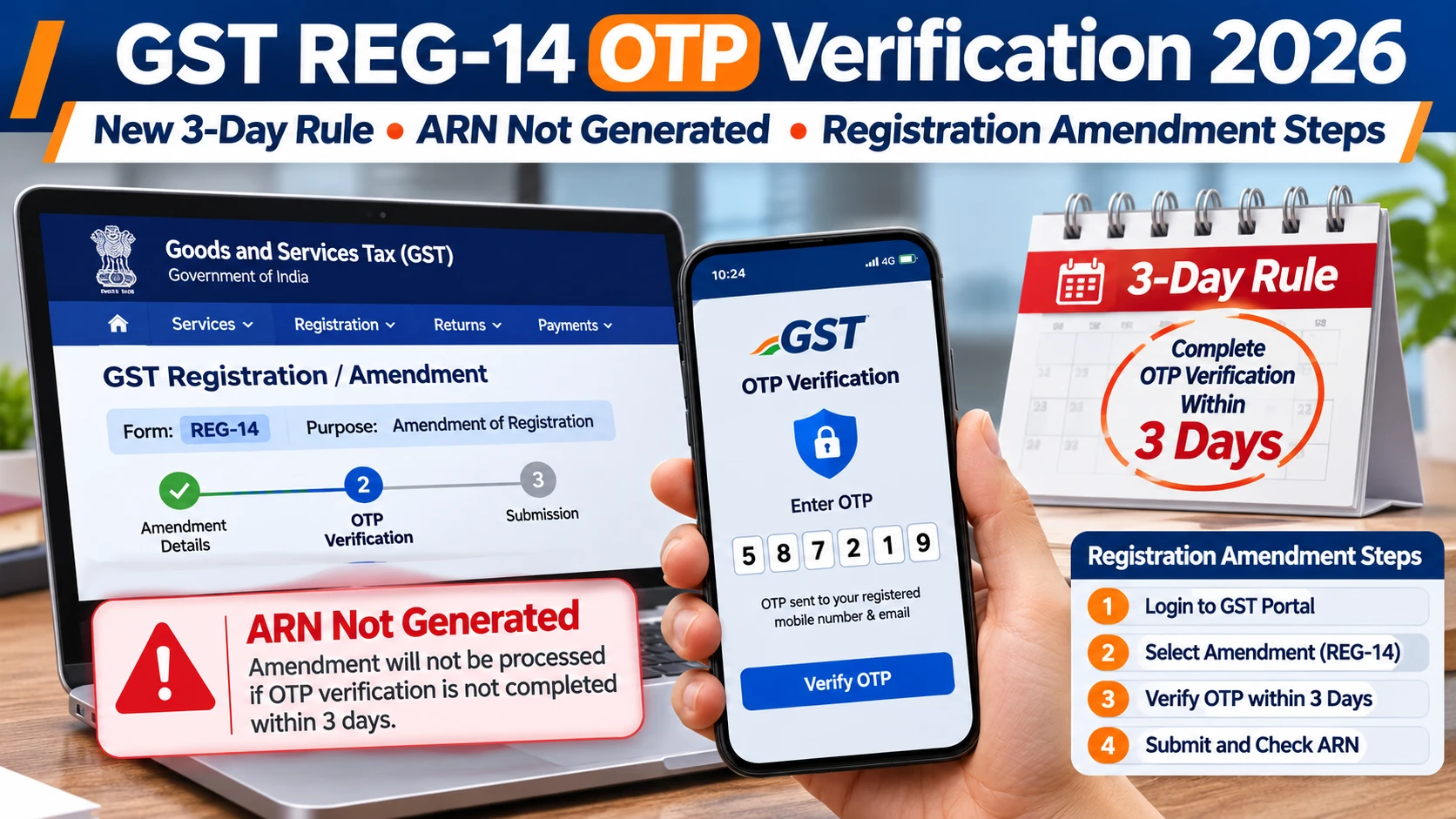
GST REG-14 OTP Verification 2026: New 3-Day Rule, ARN Not Generated and Registration Amendment Steps
SEBI NRI KYC Rules 2026: Open Investment Accounts From Abroad Without Visiting India — 7 Major Changes
GST Rule 14B Registration 2026: How Online Sellers Can Register in Another State Without Their Own Office



Is ₹25,000 the New Minimum Salary?
No.
The revision does not create a nationwide ₹25,000 minimum salary.
It changes the statutory wage ceiling for purposes of the relevant EPFO provisions.
Minimum-wage requirements arise under separate applicable laws and notifications.
Similarly, the revision does not require every employer to raise salaries to ₹25,000.
Employees should avoid confusing a contribution ceiling with a pay increase.
Is the New PF Deduction Mandatory for Everyone?
No single answer applies to every employee.
Coverage depends on factors including whether the establishment is covered, the employee’s relevant wages, the date and circumstances of membership, and any applicable exclusions or exemptions.
Employees already enrolled in EPFO may remain members under rules that differ from those governing a person joining employment for the first time.
Workers above the revised ceiling may also have different treatment depending on their membership history and other applicable rules.
Where uncertainty exists, the employer’s payroll team or an EPFO office should examine the specific case.
What Is the Impact on Take-Home Salary?
PF deductions affect the amount remaining after statutory contributions.
For an employee whose own PF deduction increases from ₹1,800 to ₹3,000, monthly take-home pay may decrease by ₹1,200, holding other factors constant.
At the same time, higher provident fund contributions can increase the amount saved for retirement.
This represents a trade-off between current disposable income and long-term savings.
The employer contribution may also affect the employee’s total cost-to-company structure, depending on the employment agreement.
Actual payslips should be reviewed rather than assuming that the entire contribution change will always be absorbed by the employer.
What Should HR and Payroll Teams Do?
Employers should examine the statutory notification and the latest EPFO implementation instructions.
Relevant steps include identifying affected employees, confirming their wages under the applicable legal definition and checking their membership status.
Read Also: DA 63% Official Order Issued on 29 October 2026
Payroll configurations may need to reflect the revised contribution ceiling.
HR and payroll teams should also confirm the appropriate allocation between EPF and EPS for eligible members.
Clear communication is important because employees may notice changes in deductions without understanding why they occurred.
Any correction of earlier payroll periods should follow the relevant legal and administrative requirements.
What Does the October 31 Government Briefing Add?
The government’s October 31 briefing described broader changes to India’s social-security system.
Alongside the higher wage ceiling, it highlighted digital services, claim-settlement reforms, simplified registration and improvements in pension delivery.
These include the Centralised Pension Payment System and the developing EPFO 3.0 service framework.
The briefing also referred to planned capabilities designed to simplify withdrawals and other member services.
Planned improvements should not be reported as universally available operational facilities unless their implementation has been confirmed.
Frequently Asked Questions
1. What is the new EPFO wage ceiling in 2026?
₹25,000 per month.
2. When did it become effective?
September 17, 2026.
3. Is ₹25,000 the new minimum salary?
No. It is a statutory wage ceiling.
4. What is the illustrative employee PF contribution at ₹25,000?
₹3,000 per month at a 12% contribution rate.
5. Will everyone’s PF deduction increase by ₹1,200?
No. The change depends on the employee’s contribution base and individual circumstances.
6. What is the applicable EPS contribution ceiling?
Where the relevant EPS provisions apply, 8.33% of ₹25,000 is approximately ₹2,083.
7. Can employees earning more than ₹25,000 remain EPFO members?
Yes, depending on their membership history and the applicable scheme provisions.
8. Does the government guarantee 51 lakh new enrolments?
No. The figure is an estimate of the additional employees expected to enter coverage.
Conclusion
The increase in the EPFO wage ceiling from ₹15,000 to ₹25,000 is an important development for employees, employers and payroll professionals.
It expands the population potentially eligible for mandatory coverage and changes the contribution base in relevant cases.
However, the effect on take-home salary, retirement savings and pension contributions will vary.
Employees should examine their payslips and membership status, while employers should apply the revised rules carefully and communicate changes clearly.
Sources
- Ministry of Labour and Employment, official Cabinet announcement, September 16, 2026.
- Gazette Notification S.O. 5109(E), September 17, 2026.
- EPFO and PIB explanatory release, September 23, 2026.
- PIB briefing, India’s Social Security Coverage, October 31, 2026.
Disclaimer: EduTaxTuber provides content for general educational and informational purposes only. While we make reasonable efforts to keep the information accurate and updated, laws, regulations, market conditions, software features, and other information may change. Some content may be created or assisted by AI tools and may contain errors or omissions. Readers should verify important information with official sources or qualified professionals before making any tax, legal, financial, investment, business, or other decisions. EduTaxTuber does not guarantee the completeness or accuracy of the information and does not provide professional advice.
